Under the Canopy: What Homeowners Must Know About Emergency Tree Removal
A compromised tree overhanging your roof is a liability that demands immediate intervention. While a healthy yard adds immense property value, severe storms, disease, and shifting soil can instantly transform a mature tree into a multi-ton hazard. Waiting for a leaning trunk to crack completely is a gamble that risks total roof destruction, severe injury, and structural displacement. Managing a tree emergency requires a quick assessment of danger signs and immediate coordination with certified professionals who possess the heavy equipment needed to handle unstable timber safely.
Spotting the Immediate Warnings of Structural Failure
Not all hazardous trees look dead. A tree can maintain a vibrant green canopy while its root system or internal trunk structure undergoes catastrophic decay. The most urgent warning sign is a sudden lean, especially if the soil at the base of the trunk is mounding or lifting upward. This heaving soil indicates that the anchor roots have broken away from the earth and can no longer support the weight of the canopy.
Look closely at the main trunk for deep V-shaped cracks, peeling bark, or large cavities where major limbs attach. These openings are structural fractures that compromise the tree’s ability to bend with the wind. Fungi growing around the base of the trunk or out of the bark are another indicator of internal rot, signaling that the wood fibers are softening. If you spot any of these defects combined with a trajectory toward your house or driveway, you are dealing with an active emergency.
Navigating the Hazardous Removal Process Safely
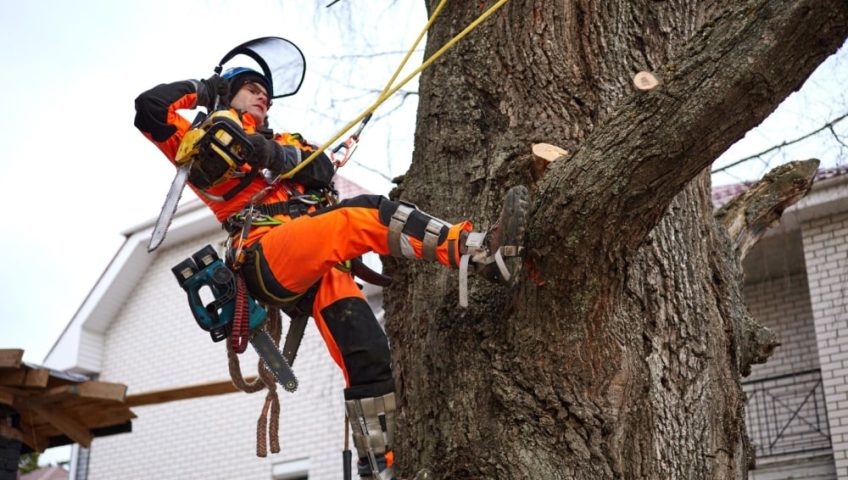
Attempting to cut down a large, damaged tree by yourself with a consumer chainsaw is an incredibly dangerous decision. Emergency removals are vastly different from standard logging because the wood is under extreme, unpredictable tension. A cracked limb can snap violently in the opposite direction of a cut, pinning a homeowner or kicking the chainsaw back into the operator’s face.
Professional crews use specialized rigging, cranes, and bucket trucks to dismantle an unstable tree piece by piece from the top down. They secure the heaviest sections to ropes and pulleys, lowering them to the ground slowly to prevent impact damage to your lawn, septic lines, and underground utilities. These teams carry massive liability insurance policies that shield you from financial responsibility if a rogue branch strikes your house during the cutting process.
Clear Steps to Take Immediately After a Storm
When a severe storm leaves a massive tree resting on your roofline, your priority must shift to personal safety. Evacuate the home immediately if the trunk has pierced the ceiling, as the shifting weight of the tree can cause a partial structural collapse. Document the damage from a distance by taking clear, wide-angle photographs of the tree, the house, and any crushed property to provide as evidence for your upcoming insurance claim.
Contact a specialized tree service east bay company immediately rather than waiting for your insurance adjuster to visit. During a widespread storm event, reputable crews book up within hours, and securing your spot on their schedule prevents further water damage from rain entering through the punctured roof. Request a detailed, written estimate that breaks down the cost of crane usage, debris hauling, and stump grinding so you can submit the paperwork seamlessly to your insurance company for reimbursement.
Conclusion
An emergency tree removal is a race against gravity with no room for hesitation or guesswork. Being able to identify the physical warning signs of a failing tree allows you to take action before you have a financial disaster in your roofline. But by taking good care of your property and working with insured professionals when structural crises hit, you can protect your family and your financial assets from the unpredictable forces of nature. Part of responsible homeownership is caring for the trees on your lot, and addressing structural timber defects with the urgency they deserve keeps your home a safe haven.