Making Room for Greenery Without Crowding a Small Space
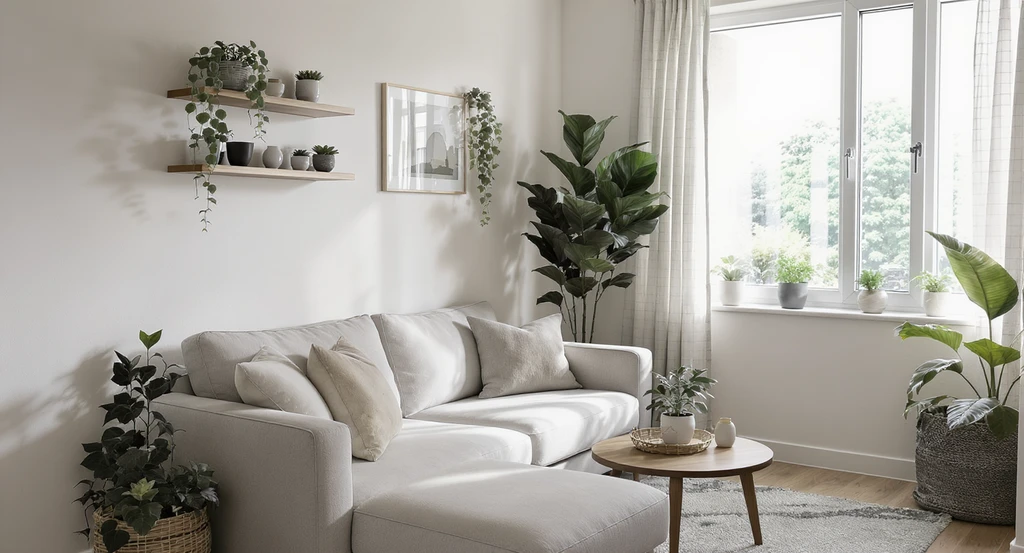
Artificial greenery can bring leafy shapes into a small room without requiring a spot that supports live plant growth. The challenge is deciding where those shapes belong. A plant that looks appealing on its own can still overwhelm a shelf, crowd a desk, or interfere with the route through the room.
Start with the furniture and the way people use the space. A room should remain comfortable after the decoration is added. Planning around a few specific locations makes it easier to choose pieces that feel intentional instead of accumulating plants wherever a gap appears.
Give each plant a clear place to live
Identify the surfaces that can comfortably spare some room. A narrow sideboard might have space at one end, while a working desk may need nearly all of its surface. An empty-looking corner is only useful if it is not part of the walking route.
Think about what happens beside each proposed location. A door may swing into a floor plant, a chair may push back toward a planter, or a curtain may brush the leaves. Those movements are easy to miss when looking at a still photograph.
Begin with one placement and assess it before adding more. You might choose a compact plant beside a lamp or a trailing shape on an open shelf. Giving that first piece enough room can make a larger difference than placing small pots on every surface.
Leave some areas undecorated. Open space around a plant helps its shape register and makes cleaning easier. In a small room, a useful empty surface can be as valuable as another decorative object.
Match the leaf shape to the available space
The outline of the foliage often matters more than the name of the plant. Upright blades, rounded leaves, and trailing stems occupy space in different ways. Compare the widest part of the foliage with the space you can actually spare.
A trailing piece can work near a shelf edge if it does not cover anything below. Check whether the leaves would hang over a frequently used book, a cabinet handle, or a speaker. The greenery should not create an extra step every time you reach for something.
A broad, spreading plant may need more space than its pot suggests. On a small desk, that spread can interrupt the working area even if the container fits neatly in a corner. Look at both the footprint and the surrounding leaf clearance.
Upright forms may suit a narrow location, but height still needs attention. Check their relationship to artwork, shelf spacing, and nearby light fixtures. A tall plant squeezed beneath a low shelf can look cramped even when its base fits.
Use containers to connect the arrangement
Containers give several different plant shapes something in common. Repeating a finish, such as matte ceramic, can create a quiet connection without buying identical pots. The foliage can then vary while the overall arrangement remains easy to read.
Choose the container in relation to the furniture beneath it. A heavy-looking pot may overwhelm a delicate shelf, while a very small container can appear lost on a broad cabinet. Compare their proportions before focusing on decorative details.
If you plan to use an outer planter, check both its interior dimensions and the dimensions of the supplied pot. Do not assume the advertised plant height tells you the container size. Any added materials should follow the product guidance and keep the display stable.
Review each planned location with a short checklist:
- Measure the surface or floor area available.
- Check the full foliage width and overall height.
- Allow room for doors, drawers, and chairs to move.
- Confirm the container sits securely on its support.
- Keep leaves clear of items used every day.
Balance the room from the usual viewing positions
Stand at the entrance and look at the room as a whole. Then sit where you normally spend time. A plant that looks balanced from the doorway may block a lamp, screen, or view from the sofa.
Try varying placement height rather than adding more pieces. One plant on a shelf and another on a side table can create separate points of interest. Matching plants lined up at the same height may produce a more formal effect, which may or may not suit the room.
Artificial greenery does not need sunlight for growth, but the room’s lighting still affects how it looks. Review the leaves in both daylight and evening light. Surface shine and color can appear different as the light changes.
Avoid treating a dark corner as an automatic destination for a plant. If the shape disappears there, it may contribute little to the room. A nearby, more visible position could work better, provided it does not interfere with the space.
Keep the arrangement easy to maintain
Faux plants still collect dust, especially where broad leaves or dense foliage create sheltered surfaces. Follow the maker’s cleaning directions and keep the plants accessible enough to care for. A display that requires moving half a bookcase may become a neglected one.
Review the placement after living with it for a few days. Notice whether you keep moving the pot, brushing past the leaves, or reaching around it. Those repeated inconveniences are useful signals that a different size or location would serve the room better.
When comparing the greenery at Fake Flowers, use your measurements and daily routines to narrow the choice. Look for a suitable shape, a stable container, and enough surrounding space to enjoy the result. A small room does not need many plants; it needs the ones you choose to fit comfortably.